

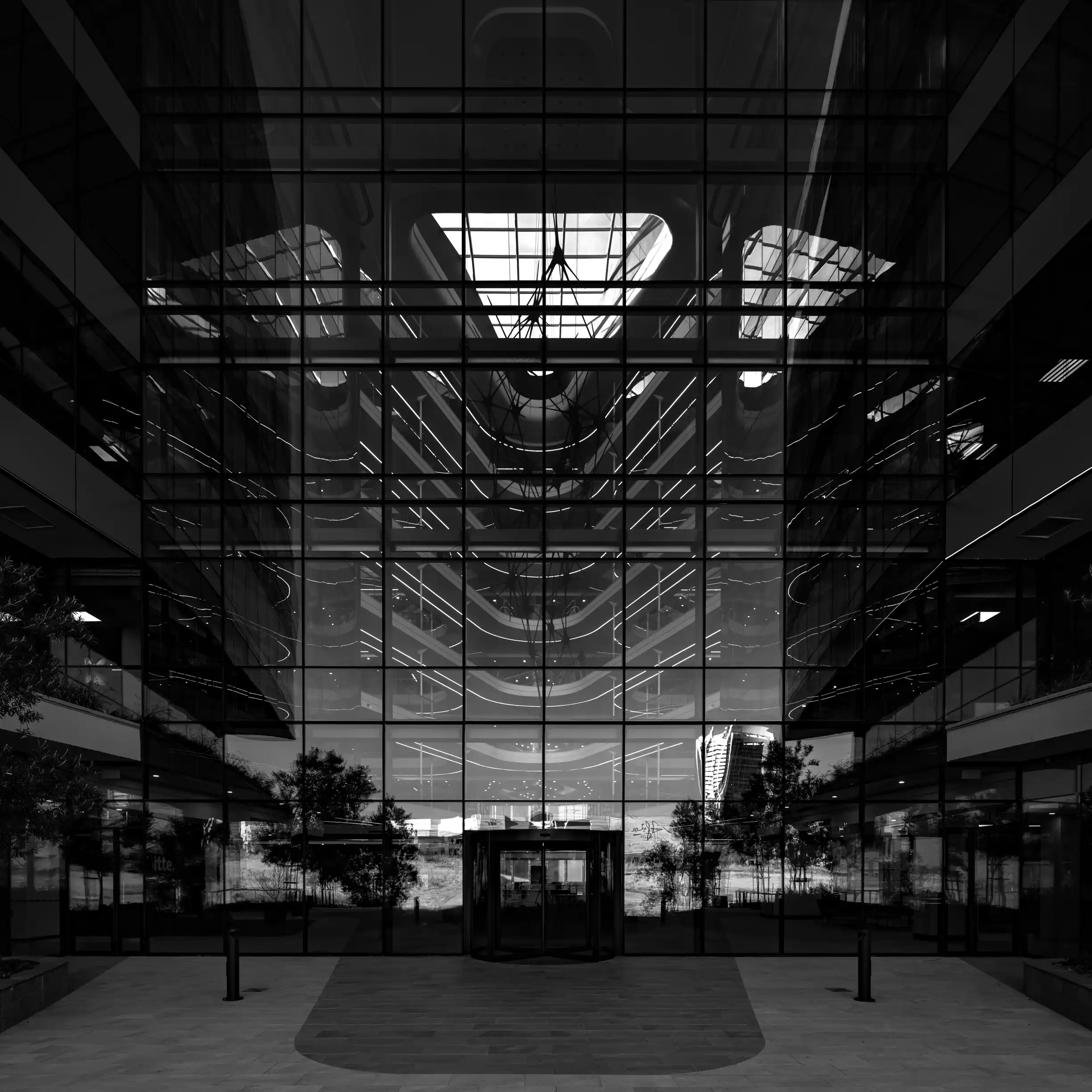
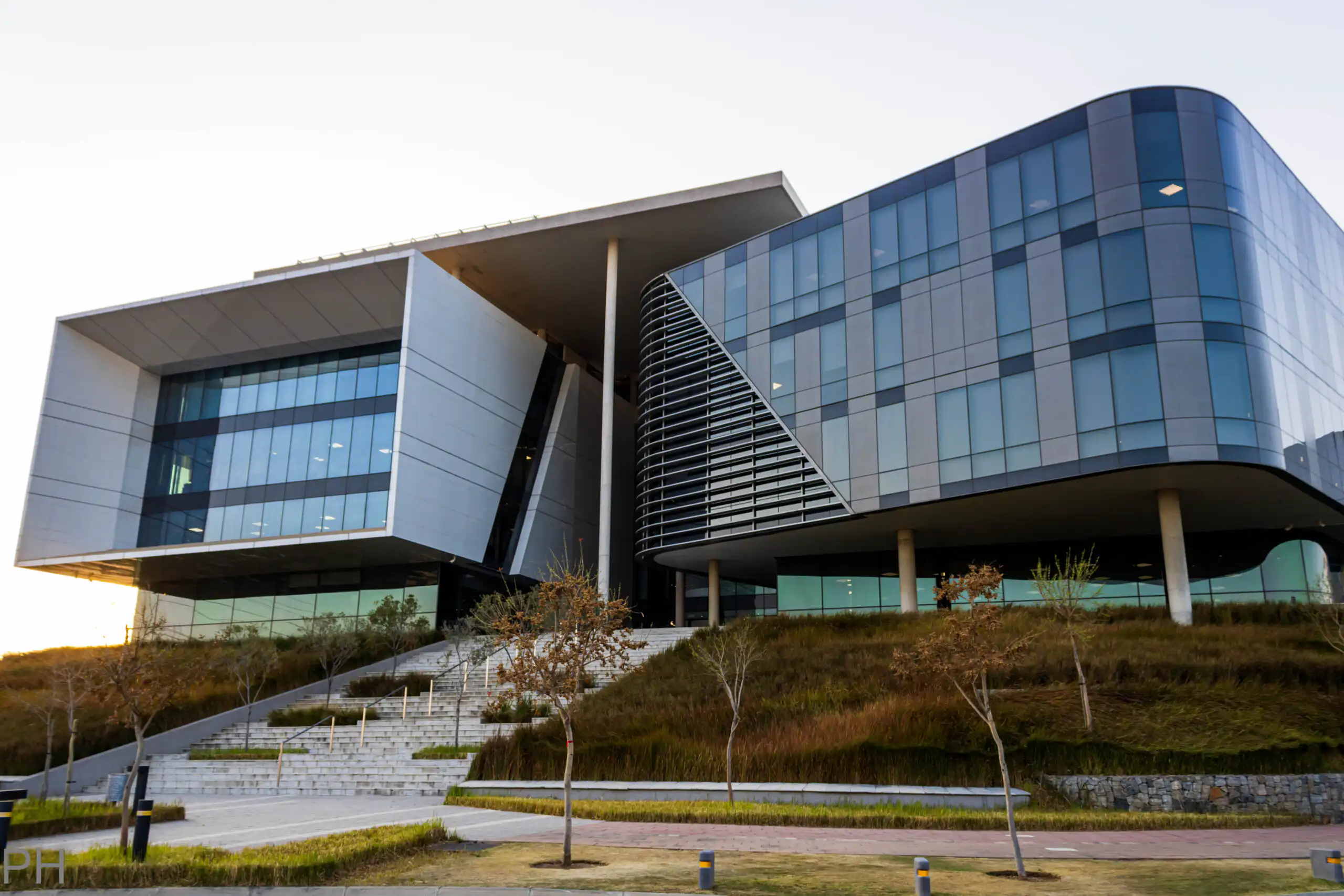
Waterfall City ranks among the largest and fastest growing property developments in South Africa, and its origins reach back to a working farm bought in 1934. Set in Midrand, halfway between Johannesburg and Pretoria, this mixed-use precinct carries a story shaped by one family, a religious endowment, and a leasehold model that broke new ground for South Africa.
Read on to learn more about how Waterval Farm became the Waterfall City of today.
What Is Waterfall City and Where Is It Located in South Africa?
Waterfall City sits in Midrand, Gauteng, on the central corridor between Johannesburg and Pretoria. Direct access to the N1 and M1 highways, two international airports, and the Gautrain network places the precinct within easy reach of the whole province. Travellers once knew this stretch of road as Halfway House, the old coaching stop between the two cities, and that central position is a large part of why national and multinational headquarters now cluster here.
The Origins of Waterval Farm
Surveyors mapped the land as a 3,400 hectare farm in 1850, long before the office towers arrived. One specific land surveyor named Peter McDonald called it Waterval after a small waterfall on the Jukskei River. The farm entered the official register in 1888. Paul Kruger, then president of the South African Republic, signed the original title deed in 1889.
Ownership of the farm passed through several hands over the following decades. A ‘Miss Pimond’ sold the farm to the Gibson brothers, who had arrived from Britain in 1871. They ran a Red Star Line stagecoach service between Johannesburg and Pretoria, and their ox wagons, cattle, and roadside pit stop gave the area its lasting name, Halfway House.
The Mia Family and the 1934 Purchase of Waterval Farm
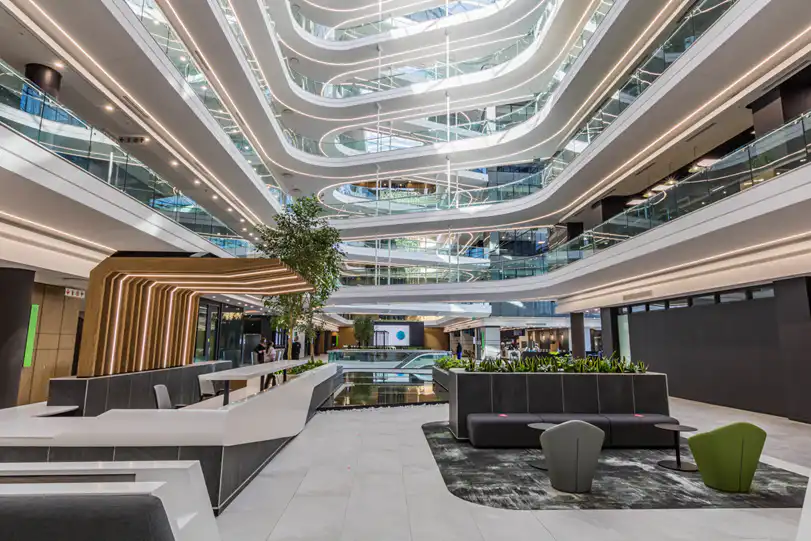
Moosa Ismail Mia purchased the farm from the deceased estate of John Alexander Gibson for £16,000. Mia was born in India in 1876, and moved to the then Transvaal in 1904, where he built substantial retail, mining, and trading interests. He registered the Waterval Farm holding under Witwatersrand Estates Limited, a company structure that allowed the purchase to proceed under the land ownership restrictions that applied to Indian South Africans at the time.
Mia developed the land as a community and farm with his four sons, Mohamed, Ahmed, Mahmood, and Yusuf, and locals came to know the property simply as Mia’s farm. The family primarily bred livestock and grew maize. In 1940, they founded the Waterval Islamic Institute, one of the first formal Muslim educational institutions in the Transvaal. Hostels, family homes, and a mosque soon followed. The institute went on to run its own printing press and produce prominent scholars.
How the 99-Year Leasehold Model Began
Under Islamic law the land is held as a waqf, an endowment dedicated to charitable purposes, which means it cannot be sold or transferred. Leasing offered a way to develop the land and honour that principle at the same time, and so every property in Waterfall City is held on a long-term lease registered at the deeds office.
Several features define how the model works:
- Ownership: The Waterfall Islamic Institute holds the land in perpetuity.
- Tenure: Properties are leased on 99-year terms, renewable with unlimited extensions.
- Purpose: Lease income funds education and welfare for underprivileged children.
- Finance: South African banks fund these leases as bondable assets, a first for the local market.
Bank financing for the leases was a groundbreaking deal at the project’s inception. That breakthrough opened the door for residential developments like Balwin’s Munyaka to follow the same structure.
From Farmland to a Planned City: The First Developers
Serious planning for a modern precinct began in 1996, after property visionary Werner Van Rhyn approached the Mia family and won their trust. Atterbury Property and Zenprop became the first developers to commit to large-scale work, taking up leasehold and partnering with the Waterfall Islamic Institute through Witwatersrand Estates Limited. Zenprop director Rodney Weinstein secured early leasehold and raised the Woodmead North office buildings that face the N1 highway. Atterbury delivered the early office parks and logistics facilities, and later built the Mall of Africa, now one of the largest shopping centres in South Africa.
Attacq and the Mall of Africa
Attacq Limited, a JSE-listed real estate investment trust, serves as the strategic development partner of Waterfall City and co-owns the Mall of Africa. Attacq held an 80 percent interest through the Attacq Waterfall Investment Company before acquiring the remaining 20 percent from Atterbury.
Investment continues to flow into the precinct, with a development pipeline spanning offices, residential towers, data centres, and logistics. Recent reporting on Attacq’s multi-billion-rand Waterfall City expansion sets out the scale of that ongoing investment.
Waterfall City Management Company: Running the Precinct
The Waterfall City Management Company (WCMC) runs the daily operations of the precinct. Their fundamental directive is to maintain, protect, and enhance the precinct on behalf of the landowners and developers.
Clean streets, manicured gardens, and a consistent architectural standard all trace back to this body, which enforces design guidelines across every parcel. Its security oversight, funded through monthly levies paid by Attacq, has earned Waterfall City a reputation as one of the safest mixed-use nodes in Gauteng.
What Makes Waterfall City a Sought-After Address?
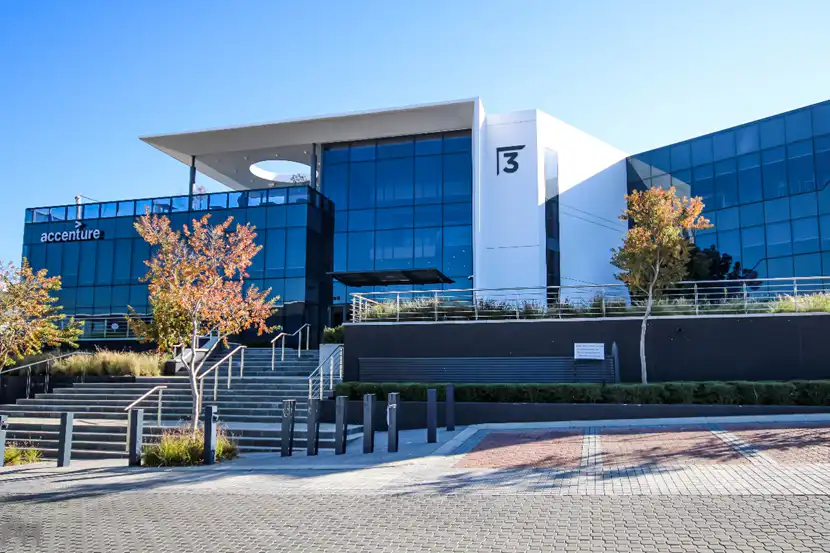
Location, infrastructure, and lifestyle combine to keep demand high among business and residential tenants. The precinct offers:
- Central location: Midrand placement gives quick access to highways, airports, and the wider Gauteng region.
- Modern infrastructure: State-of-the-art telecommunications, fibre connectivity, and transport systems run throughout.
- Sustainable design: Green building practices, water conservation, and renewable energy guide every phase.
- Wide amenities: Retail centres, restaurants, hotels, medical facilities, and recreational areas sit close at hand.
- Quality of life: A live-work-play layout supports a safe, clean, well-serviced environment.
- Round-the-clock safety: Patrolled security, panic buttons every 200 metres, biometric access control, and backup-powered lighting protect the area day and night.
Blue-Chip Tenants in Waterfall City
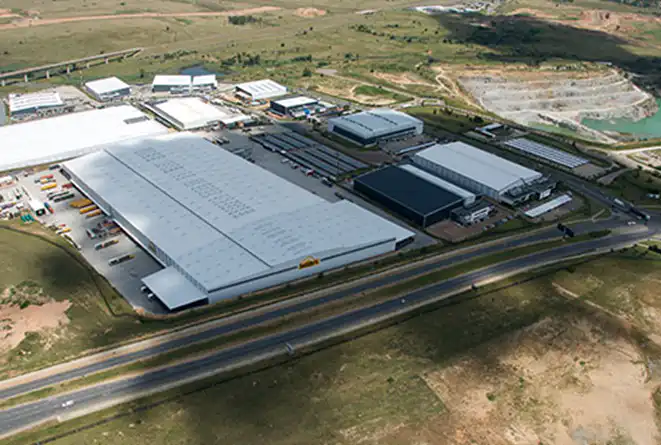
Leading corporations have made the precinct their home over the years. The tenant roster includes Deloitte, PwC, Accenture, Dis-Chem, Novartis, BMW, Cummins, Dimension Data, Cisco, Builders Warehouse, and Cotton On. Seven buildings make up the Corporate Campus, served by a central restaurant and two Wi-Fi-enabled conference facilities, and the Waterfall City Logistics Hub draws light industrial, logistics, and distribution businesses into purpose-built space.
What’s New: Gateway East and Continued Commercial Growth
Gateway East is Waterfall City’s newest landmark development, designed as a connected, flexible office and collaboration hub at the main entrance. Direct integration with the Mall of Africa, roughly 10,000 square metres of gross lettable area, generous outdoor terraces, and a mix of independently operated restaurants give the building a strong identity.
Letting has moved quickly as more people invest in the prime commercial real estate, with a handful of spaces remaining and basic rentals from R185 per square metre net of operating costs and levies.
Find Commercial and Office Space in Waterfall City
Demand for quality space in Waterfall City stays strong as the precinct keeps growing. Businesses searching for office space, modern logistics premises, or a corporate headquarters near the northern corridor can lean on the local knowledge of the PH Real Estate team. Learn more about our commercial property specialists, browse our latest listings, or contact our team to discuss your requirements.
Frequently Asked Questions
Where is Waterfall City located? Waterfall City lies in Midrand, Gauteng, on the central corridor between Johannesburg and Pretoria, with direct access to the N1 and M1 highways.
Who owns Waterfall City? The Waterfall Islamic Institute, a trust established by the Mia family, holds the land and leases it on 99-year terms. Attacq Limited acts as the strategic development partner and co-owns the Mall of Africa.
How much did the Mia family pay for Waterval Farm? Moosa Ismail Mia bought the farm in 1934 for £16,000 from the deceased estate of John Alexander Gibson, as documented by the Mail & Guardian.
Why can land in Waterfall City only be leased? The land is held as a waqf, an Islamic endowment, under a religious principle of keeping it in perpetuity. Properties carry 99-year leases, and the lease income funds charitable and educational causes.